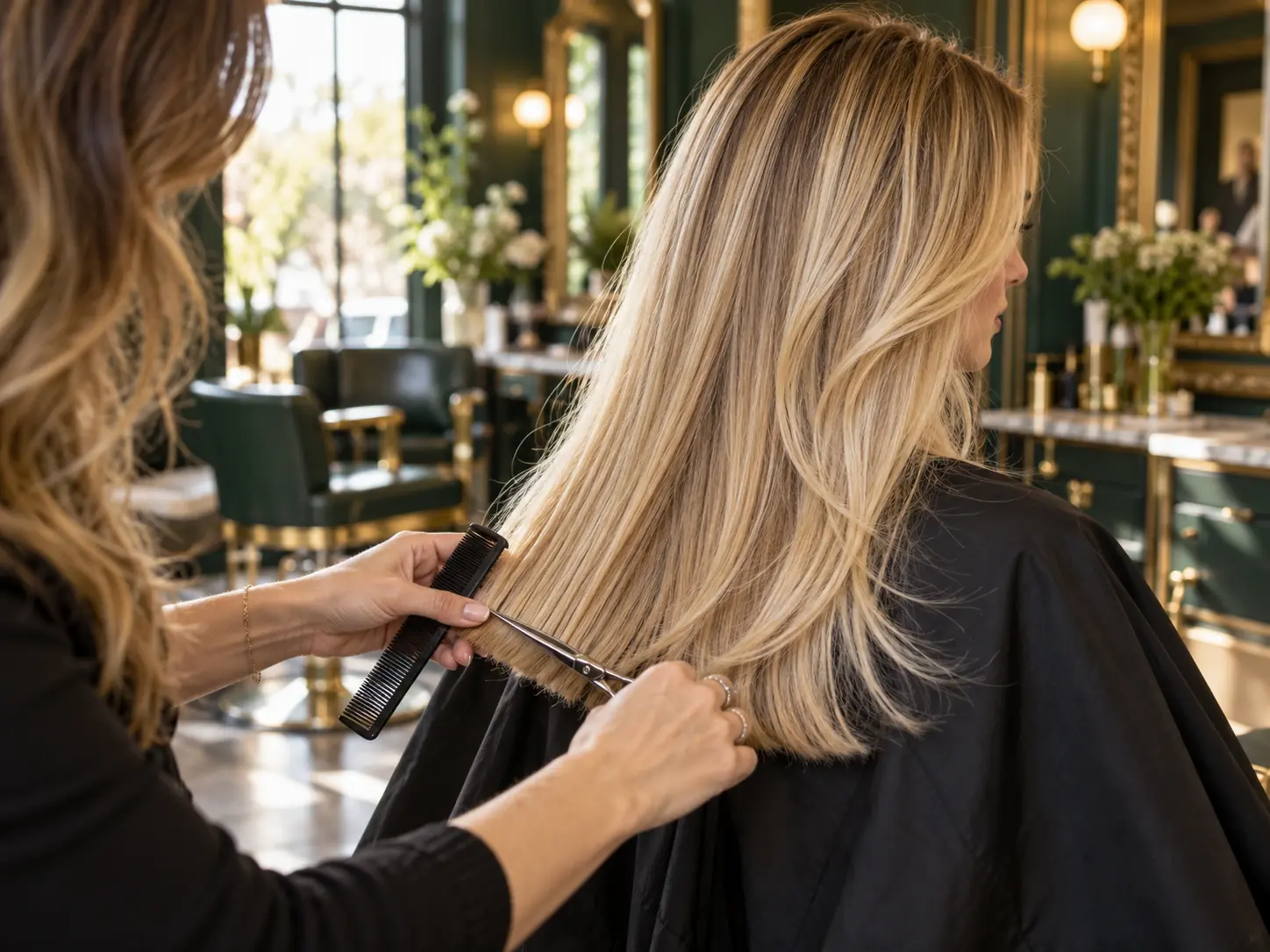
The right time between haircuts depends on the shape you wear and what you want your hair to do next.
Hair does not suddenly become unhealthy when a calendar date passes, and trimming it does not change how quickly it grows from the scalp. Regular cuts do help preserve a deliberate shape, remove weathered ends and make daily styling easier. Use the ranges below as planning guides rather than fixed rules.
Short cuts: around 4–6 weeks
Pixies, crops and close, structured shapes can lose their outline quickly as the sides, neckline and fringe grow. If you enjoy a crisp finish, four to six weeks is a useful starting point. Softer short styles may comfortably stretch longer, especially if you are happy to let the shape relax.
Medium lengths: around 6–10 weeks
Bobs, lobs and shoulder-length layers often sit well for six to ten weeks. A blunt bob may need earlier reshaping to keep its line, while a textured or softly layered cut can be more forgiving. Book sooner if the ends begin flicking unpredictably or the shape feels heavy.
Long hair: around 8–12 weeks
Long styles can often go eight to twelve weeks between trims when the ends are in good condition. Lightened hair, frequent hot-tool use or fine ends may need attention earlier. If you are growing your hair, small planned trims can maintain fullness without repeatedly removing your progress.
Useful clue: When styling takes longer but the result lasts for less time, the shape may be ready for a refresh.
Fringes and specialised shapes
A fringe may need a tidy every two to four weeks because a small amount of growth changes where it sits. Shags, curly shapes and precision cuts each grow differently, so ask whether your salon offers a short fringe or neckline appointment between full cuts.
Watch the hair, not only the diary
Book when the ends tangle more, the perimeter looks thin, layers stop moving or your usual styling no longer brings the shape back. Also consider your next goal. Growing out a fringe, changing from a bob to long layers or improving damaged ends works best with a shared plan rather than skipping every cut.
Your stylist can recommend a range after seeing your hair and how the cut grows. If you prefer fewer appointments, say so—the shape can often be designed with a softer, lower-maintenance grow-out in mind.